
2026-03-06 Advanced Photo-Curable Nitrile Elastomers for High-Performance Stretchable Transistors and Neuromorphic Computing
時間:2026-03-06(五) 15:20 pm
講題:Advanced Photo-Curable Nitrile Elastomers for High-Performance Stretchable Transistors and Neuromorphic Computing
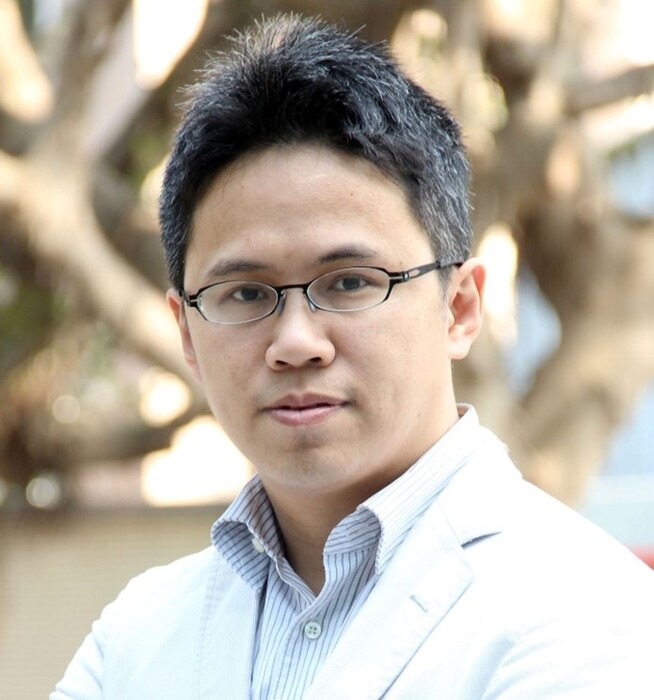
講者:李文亞 教授
服務單位:台北科技大學 化學工程與生物科技系
地點:93456
主持人:林彥丞 教授
摘要:
The development of intrinsically stretchable electronics is critical for next-generation wearable applications. However, achieving high-performance operation at low voltages remains a significant challenge due to the limitations of current dielectric materials. This presentation outlines a comprehensive strategy to engineer Nitrile Butadiene Rubber (NBR) using thiol-ene click chemistry to create multifunctional, photo-patternable, and high-permittivity materials for stretchable organic field-effect transistors (OFETs) and artificial synapses. First, the development of a high-k nanocomposite dielectric achieved by cross-linking titanium dioxide (TiO2) nanosheets with NBR will be presented. This hybrid material exhibits a widely tunable dielectric constant (k ~15–162) and robust stretchability, enabling OFETs to operate at low voltages with high transconductance. Second, the polarizability and hysteresis of NBR dielectrics will be demonstrated how to precisely modulate using multi-functional thiol cross-linkers. This approach not only yields a high dielectric constant (k=14.6) and excellent solvent resistance but also enables direct photo-patterning without photoresists. These devices effectively mimic synaptic behaviors, and have been successfully integrated into a Convolutional Neural Network (CNN) for acoustic classification with 99% accuracy, even under 60% mechanical strain. In the final part, I will present our recent work on Solid-State Polymer Electrolytes (SPEs) formed by embedding LiTFSI salts into the photo-cross-linked NBR network. This electrolyte-gated architecture (EGOFET) leverages ion migration to achieve a high ON/OFF ratio and significant synaptic plasticity at ultra-low energy consumption. We demonstrate the practical utility of these devices in a Deep Neural Network (DNN) for handwritten digit recognition, achieving 91.9% accuracy. Collectively, these studies establish photo-curable NBR as a versatile platform for realizing scalable, low-power, and mechanically robust neuromorphic systems.
學歷:
2004 - 2009 Ph. D., Chem. Eng., National Taiwan University
2002 - 2004 Master, Chem. Eng., National Chung-Cheng University
1998 - 2002 Bachelor, Chem. Eng., National Chung-Cheng University
經歷 :
Professor at Taipei Tech. Since Feb. 2025
Associate Professor at Taipei Tech. Feb. 2019 - Jan 2025
Assistant Professor at Taipei Tech. Feb. 2015-Jan 2019.
Postdoc Researcher, Chem. Eng., Stanford University, US Mar. 2012 – Jul. 2014
Postdoc Researcher, Chem. Eng., National Taiwan University Oct. 2010 – Feb. 2012; Aug. 2014– Jan.
